Commercial buildings depend on electrical systems that operate quietly in the background. Panels, breakers, disconnects, switchgear, and feeders carry the load every day. A problem can develop inside that equipment long before anyone sees visible damage.
An infrared electrical inspection helps facility managers find heat patterns that point to trouble. This service gives building owners a clearer view of electrical equipment and helps them plan repairs before a component fails during business hours.
What an Infrared Electrical Inspection Shows
An infrared electrical inspection uses thermal imaging to identify temperature differences within electrical equipment. A trained electrician scans energized panels and components with an infrared camera. The camera displays heat that cannot be seen with the naked eye.
Hot spots can indicate a loose connection, overloaded circuit, failing breaker, damaged component, or uneven load. The inspection gives the electrician a starting point for further evaluation and repair planning.
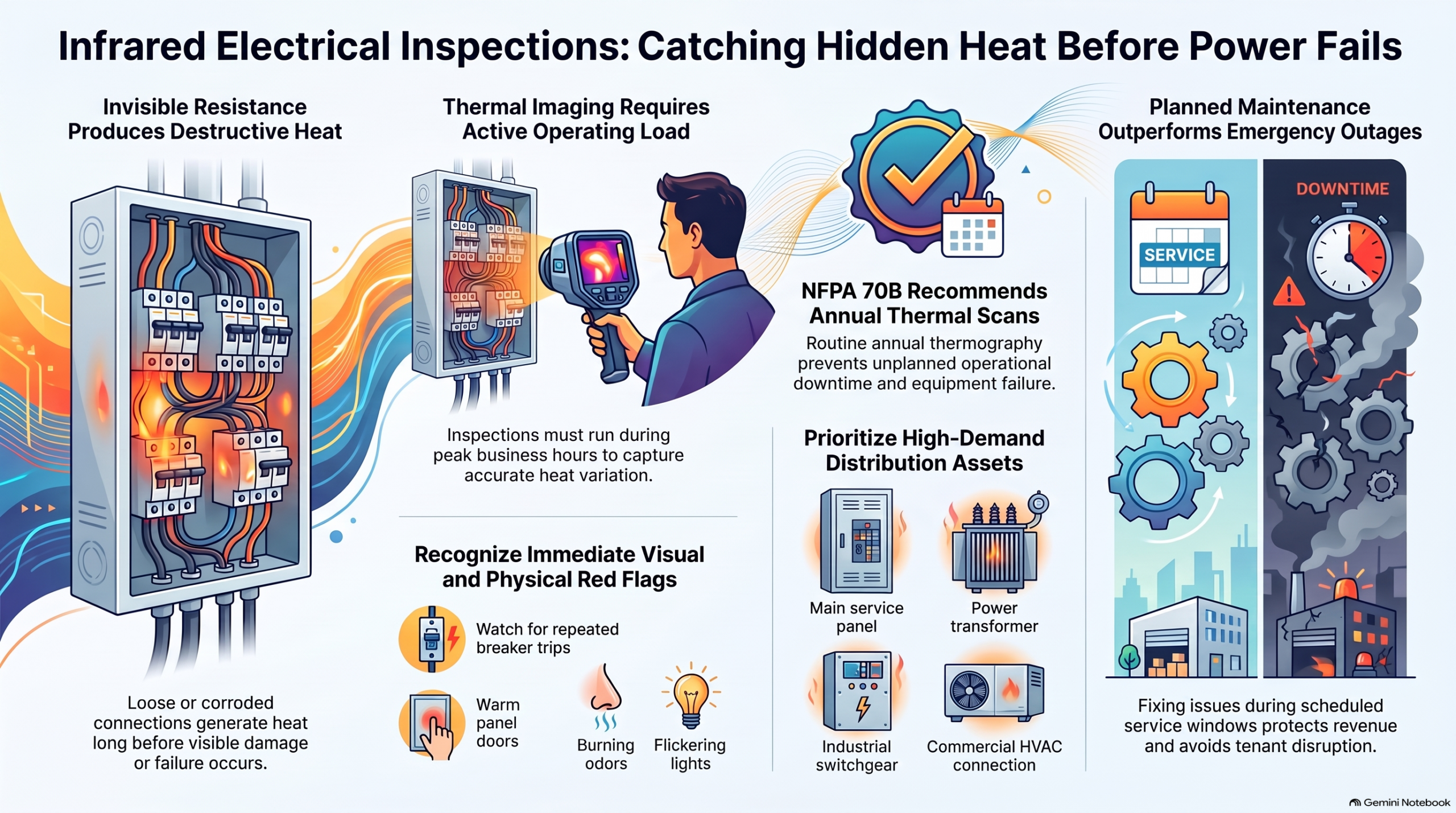
This work can be especially useful in commercial properties with aging panels, expanding electrical loads, or equipment that runs for long hours. In fact, industry guidelines like NFPA 70B recommend routine infrared scans at least annually to prevent catastrophic equipment failure and unplanned downtime.
Why Heat Matters in Electrical Equipment
Electrical connections create resistance when they loosen, corrode, or wear down. Resistance produces heat. Over time, excess heat can damage insulation, terminals, breakers, and surrounding components.
A thermal imaging electrical panel inspection allows an electrician to locate elevated temperatures while equipment is under normal operating load. That view is valuable because some electrical issues appear only when circuits are carrying power.
A panel may look clean and orderly from the outside. Inside, a single connection can be running much hotter than the rest of the system. Finding that condition early gives the facility team time to schedule work around business operations.
When Infrared Electrical Inspection Services Pay for Themselves
An unexpected electrical failure can disrupt tenant operations, shut down equipment, spoil inventory, or create expensive emergency work. Infrared electrical inspection services help reduce the chance that a hidden heat issue becomes a larger event.
The value often becomes clear when the inspection identifies a problem that can be corrected during planned maintenance. A repair performed during a scheduled service window is easier to manage than an outage that stops work in the middle of the day.
Commercial buildings that benefit from electrical infrared inspection include:
- Office buildings with shared electrical distribution systems
- Retail centers with tenant improvements and changing loads
- Medical and dental offices that depend on specialized equipment
- Warehouses with lighting, charging stations, and material-handling equipment
- Restaurants with high-demand kitchen equipment
- Hospitality properties with continuous guest and building-service loads
- Wineries and production spaces with pumps, refrigeration, and control equipment
For many facilities, infrared thermography electrical inspection becomes part of a larger electrical preventive maintenance program.
Equipment That Should Be Scanned
An electrical infrared inspection can cover much more than a main service panel. Each building has its own equipment mix, load profile, and operating schedule.
Common inspection points include:
- Main electrical service equipment
- Distribution panels
- Branch circuit panels
- Circuit breakers
- Disconnect switches
- Transformers
- Motor control equipment
- Automatic transfer switches
- Generator connections
- Electrical connections serving HVAC equipment
- UPS systems and battery equipment
- High-use receptacles or dedicated equipment circuits
The inspection scope should focus first on equipment that supports critical building functions. HVAC systems, refrigeration, security systems, emergency power, communications equipment, and production equipment often deserve close attention.
A Thermal Imaging Electrical Panel Inspection Works Best Under Load
Thermal imaging depends on active electrical load. A panel with very little demand may show limited temperature variation, even if a concern exists under heavier use.
For that reason, an electrician may recommend scheduling the inspection during normal operating hours or during a period when the facility carries its typical load. A warehouse may need scanning during an active shift. A restaurant may need service during food preparation. An office building may be best inspected on a weekday when occupants are present.
Timing helps create useful images and meaningful readings. The final report should identify the equipment scanned, the location of any elevated temperatures, the likely issue, and recommend next steps.
Signs Your Building May Need an Inspection
Some facilities schedule an infrared inspection as part of routine maintenance. Others call after they notice a concern.
Consider scheduling infrared electrical inspection services if you see:
- Repeated breaker trips
- Flickering lights in a particular area
- A warm panel door or electrical enclosure
- Burning odors near electrical equipment
- Discoloration around breakers or terminals
- Equipment that loses power without an obvious cause
- Recent additions to the building’s electrical load
- Older panels with years of continuous service
An inspection also makes sense after a major equipment installation, a utility event, water intrusion, or an electrical repair that involved critical distribution equipment.
Local Commercial Buildings Need Practical Planning
Commercial buildings across Santa Rosa, Novato, Petaluma, and Napa and the North Bay serve a wide range of businesses. Some properties house professional offices. Others support retail, hospitality, production, storage, healthcare, or food service.
Each type of property places different demands on its electrical system. A preventive inspection plan should account for the equipment in the building, the work performed there, and the cost of an interruption.
Facility managers also need service that fits around tenants, customers, deliveries, and staff schedules. A qualified electrical contractor can coordinate an inspection window that provides useful results while limiting disruption at the property.
Choose an Experienced Electrical Contractor
A quick search for infrared electrical inspection near me will turn up a long list of contractors. Commercial facilities need a contractor who understands electrical distribution equipment and knows how to interpret thermal findings in the context of the whole system.
Look for a contractor who provides clear reports, identifies the equipment inspected, explains the urgency of each finding, and can complete the recommended repair work. The report should help building owners make informed maintenance decisions rather than leave them with a collection of images.
Find Electrical Issues Before They Interrupt Operations
An infrared electrical inspection gives commercial building owners useful information about the condition of their electrical equipment. It can identify heat-related concerns early and support well-timed repairs.
At Knights’ Electric, we provide infrared electrical inspection services for commercial facilities throughout the North Bay. Our team can assess your electrical equipment, document the findings, and help you build a maintenance plan that supports safe, dependable building operations.
Contact Knights’ Electric today to schedule an infrared electrical inspection for your commercial property. Call or email us to talk with our team about coordinating an inspection window that works with your building’s schedule.
Frequently Asked Questions
What is an infrared electrical inspection?
An infrared electrical inspection uses a thermal camera to scan energized electrical equipment for abnormal heat patterns. The inspection can help identify loose connections, overloaded circuits, failing components, and other issues that create excess heat.
How often should a commercial building have a thermal imaging electrical panel inspection?
Many commercial facilities schedule an annual inspection. Buildings with heavy electrical demand, critical equipment, older infrastructure, or frequent changes in occupancy may benefit from a more frequent schedule.
Can infrared thermography electrical inspection require a power shutdown?
The inspection usually takes place while equipment is energized and carrying load. An electrician follows appropriate safety procedures and may recommend shutdown work later if a repair requires access to energized components.
What happens after an electrical infrared inspection finds a hot spot?
The electrician reviews the findings, evaluates the affected equipment, and recommends the appropriate repair. The urgency depends on the temperature difference, equipment condition, load, and the role that equipment plays in the building.
Do Santa Rosa, Novato, Petaluma, Napa and North Bay commercial properties need different inspection plans?
Yes. An office building in Santa Rosa may have different priorities than a winery in Napa, a retail center in Petaluma, or a medical office in Novato. The inspection scope should fit the property’s electrical equipment and operating demands.