
Choosing the right industrial electrical contractor is one of the most important decisions an industrial or manufacturing facility can make. No plant manager would simply rely on an online search for an “industrial electrical contractor near me” for their facility’s needs. But knowing what criteria to use for that decision can be challenging.
When You Need an Electrical Contractor “Industrial Strength”
Consider the scope and breadth of impact that industrial-level electrical issues can have. A faulty circuit breaker in a home is a nuisance and might cause some inconvenience. Even a commercial electrical problem can result in a minimal amount of lost time or delays in operations.
But in a manufacturing facility or a distribution center, electrical issues can be costly and potentially disastrous for a business. Industrial facilities are reliant on production uptime and operational reliability.
Industrial Electrical Work Differs from Commercial Work
Industrial electrical work involves the design and installation of complex electrical systems that power heavy machinery, automation processes, and high-voltage equipment commonly found in large manufacturing plants, processing facilities, and industrial sites.
Commercial electrical work, however, primarily involves standard building systems such as lighting, outlets, HVAC wiring, and general power distribution. This is typically performed in environments such as offices, retail stores, and public buildings, where the electrical loads and system complexity are generally lower.
In this article we will consider the key criteria for hiring an industrial electrical contractor.
Understand Your Facility’s Electrical Needs Before Hiring
Every industrial facility has unique electrical requirements, making it important to define your project’s scope before selecting a contractor.
New Equipment Installations
Growing concerns often face numerous electrical challenges with the installation of new equipment such as production machinery and motor controls.
Facility Expansion
Growth also can mean the need for:
- Additional power capacity
- New production lines
- Electrical infrastructure planning
Preventive Maintenance
Every industrial facility needs ongoing industrial electrical maintenance services to stay on track. These can include:
- Routine inspections
- Testing
- Troubleshooting
Choose a Contractor with Proven Industrial Experience
Industrial environments require specialized knowledge that goes well beyond traditional commercial electrical work. This knowledge can only be attained through experience: in the field, on site, and over time. Your business is too valuable and your operations too critical to entrust to an amateur firm.
And no two facilities are the same.
- Manufacturing facilities rely on industrial electrical work to power and control production lines, heavy machinery, and automated systems.
- Food processing plants require specialized electrical systems that support automated processing equipment while meeting strict safety and sanitation standards.
- Warehouses depend on electrical systems for lighting, conveyor systems, inventory tracking technology, and equipment charging stations such as forklifts.
- Distribution centers utilize advanced electrical systems to support high-speed sorting, automated conveyor networks, and logistics technology.
Heavy Equipment and Safety Procedures
Industrial electricians don’t just connect power. These professionals work within complex, high-risk environments where electrical systems and heavy machinery are closely integrated. Industrial electricians are responsible for installing, powering, maintaining, troubleshooting, and upgrading the electrical systems that operate heavy industrial equipment.
Depending on the facility, this may include:
- CNC machines
- Conveyor systems
- Hydraulic and pneumatic equipment
- Industrial presses
- Packaging machinery
- Compressors and pumps
- Industrial ovens and furnaces
- Material handling equipment
- Production lines
Unlike commercial electrical work, these machines often require:
- Three-phase power
- High-voltage distribution
- Motor control centers (MCCs)
- Dedicated circuits and transformers
An expert industrial electrical contractor understands how these systems interact and can safely integrate new equipment without overloading existing electrical infrastructure or disrupting production.
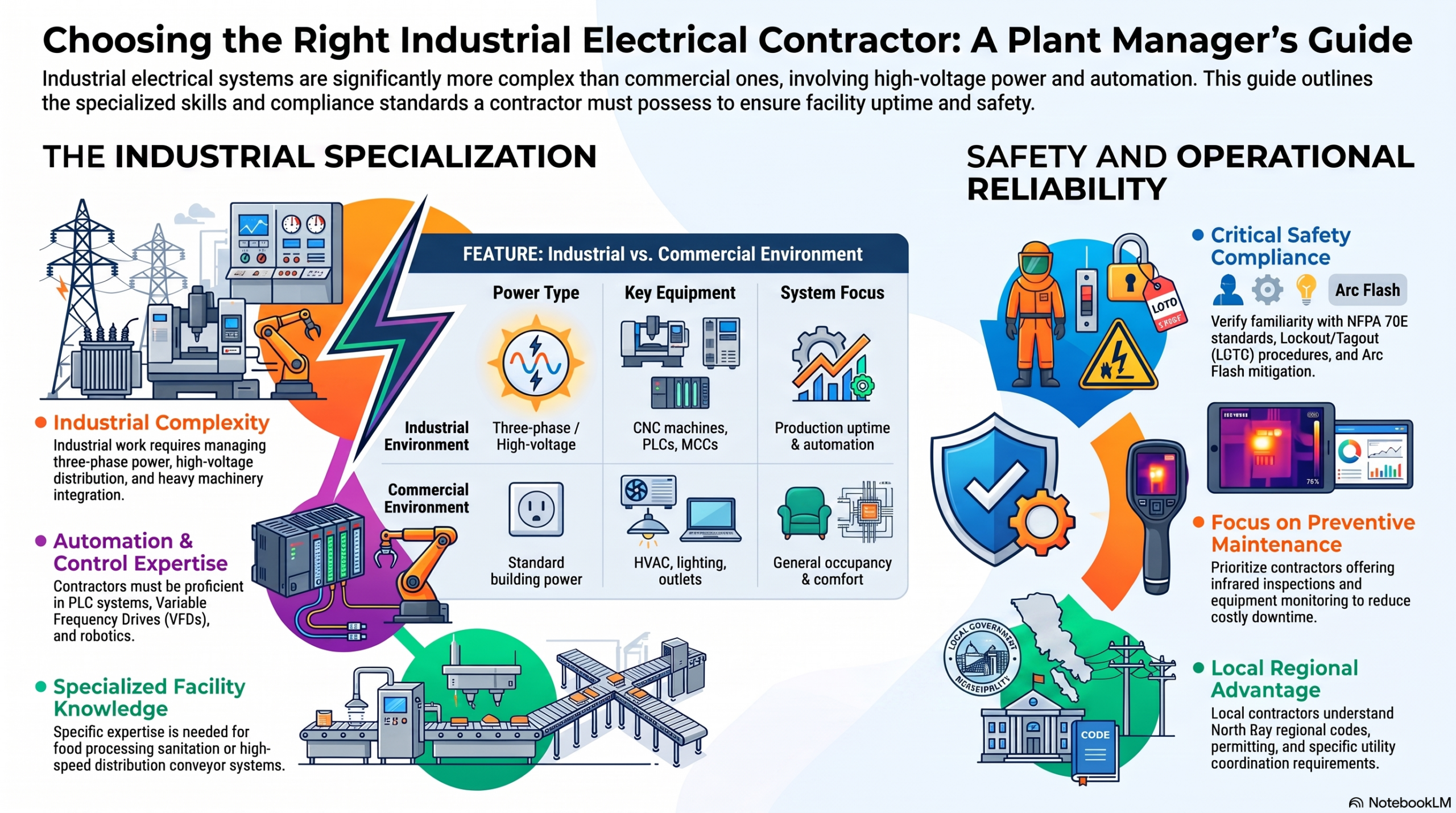
Choosing the Right Industrial Electrical Contractor: A Plant Manager’s Guide to specialization, safety compliance (NFPA 70E, LOTO, Arc Flash), and preventive maintenance.
Evaluate Automation and Controls Expertise
Modern industrial facilities increasingly depend on automation systems that require an experienced industrial automation electrical contractor. These systems can include:
- PLC Systems (Programmable Logic Controllers) are industrial computers that automate and control machinery, production lines, and manufacturing processes.
- Motor Control Systems regulate the operation of electric motors that power pumps, conveyors, compressors, fans, and other industrial equipment.
- Variable Frequency Drives (VFDs) adjust the speed and torque of electric motors based on operational demand rather than running at full speed continuously.
- Control Panels serve as the central hub for monitoring and managing industrial electrical systems. They house switches, breakers, relays, PLCs, and other components.
- Industrial Robotics Integration involves connecting robotic systems to a facility’s electrical and automation infrastructure.
Verify Licensing, Safety Standards, and Compliance
Safety and compliance should always be a top priority when selecting an industrial electrical contractor. A qualified contractor will maintain a strong safety culture, follow OSHA regulations, and adhere to industry standards such as NFPA 70E for electrical safety in the workplace. They will also be experienced in lockout/tagout (LOTO) procedures, arc flash hazard mitigation, and other best practices that protect both workers and equipment.
Choosing a contractor with a proven commitment to safety not only reduces the risk of accidents but also helps minimize costly downtime, maintain regulatory compliance, and ensure your facility operates efficiently.
Items to inquire about:
- California C-10 License
- Bonding and insurance
- OSHA safety practices
- Lockout/tagout procedures
- Arc flash awareness
- NFPA 70E familiarity
Ask About Preventive Maintenance Programs
Industrial electrical maintenance services and preventive maintenance help reduce costly downtime while extending the life of your facility’s electrical systems.
These services should include:
- Infrared inspections
- Preventive testing
- Equipment monitoring
- Scheduled maintenance
- Emergency response
Look for Local Experience in the North Bay
Hiring a contractor with experience serving North Bay facilities can streamline project planning and improve responsiveness. As a local industrial electrician, Santa Rosa, CA contractors will have a familiarity with local industries, local permitting, and regional code requirements. In addition, these firms will be experienced local utility coordination.
Hiring the Right Industrial Electrical Contractors is an Investment That Requires Due Diligence
The right industrial electrical contractor is more than a service provider. A quality firm is a trusted partner in maintaining safe, reliable, and efficient plant operations. At Knights Electric, we understand that industrial facilities depend on safe, reliable electrical systems to keep operations running efficiently.
Whether you’re installing new production equipment, upgrading your facility’s electrical infrastructure, or developing a preventive maintenance strategy, our experienced team delivers code-compliant solutions designed to maximize performance, minimize downtime, and support your long-term operational goals.
If you’re looking for an experienced industrial electrical contractor in the North Bay, contact Knights Electric today. We’ll work with you to evaluate your facility’s needs and develop electrical solutions that keep your plant operating safely, efficiently, and ready for future growth.
FAQs
What does an industrial electrical contractor do?
An industrial electrical contractor designs, installs, maintains, and repairs electrical systems in industrial facilities such as factories, plants, and warehouses. This includes power distribution, control systems, machinery wiring, and safety compliance.
How is industrial electrical work different from commercial electrical work?
Industrial electrical work focuses on complex systems like heavy machinery, automation, and high-voltage equipment, while commercial work typically involves lighting, outlets, and standard building systems in offices or retail spaces.
What industries benefit from preventive electrical maintenance?
Industries such as manufacturing, food processing, mining, logistics, energy, and water treatment benefit from preventive electrical maintenance to reduce downtime, improve safety, and extend equipment lifespan.
Can industrial electricians install and maintain automation systems?
Yes, industrial electricians are trained to install, program, and maintain automation systems, including PLCs, control panels, sensors, and motor controls used in modern industrial operations.
How often should industrial electrical systems be inspected?
Industrial electrical systems should typically be inspected at least once a year, with more frequent checks recommended for high-demand or critical operations to ensure safety and reliability.
Knights’ Electric, Inc. — Full-service commercial and industrial electrical contracting across the North Bay region.